A Worked 13-Card Declaration
Walk through a complete hand, then diagnose an almost-valid declaration.
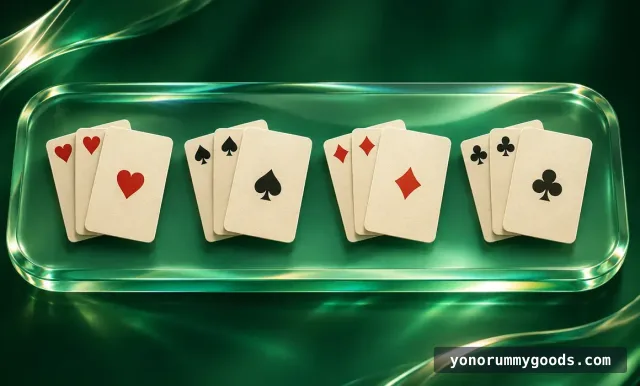
Try laying out these thirteen cards with a physical deck before reading the explanation. Keep each group separate so that counting mistakes stand out.
The complete hand
Group one: 4♥ 5♥ 6♥. Group two: 9♠ 10♠ J♠. Group three: 3♣ 3♦ 3♠. Group four: Q♣ Q♦ Q♥ Q♠. There are 3 + 3 + 3 + 4 cards, thirteen in total. The first two groups are both pure sequences, and the remaining cards form two sets with distinct suits.
The near miss
Suppose you replace 10♠ with 10♥. The ranks still look consecutive when sorted numerically, but the second run no longer shares a suit. Even though you still have a pure run and two valid sets, the remaining cards do not complete a second sequence. Keep playing.
Explain the declaration aloud
Identify your pure sequence. Point to your second sequence and name any substitution. Then count the remaining groups and verify that no card appears twice. This simple routine is useful when a pick from the discard pile opens up a new layout late in the hand.
Review pure sequences and jokers for more examples.